
Our story
In the beginning
The band Marsupliami borrowed its name from the Belgian cartoonist André Franquin who created this comic character in 1952. Marsupilami was a cross between a monkey and a cat, yellow with black spots; cute, resourceful and anti-authority. Perhaps not an obvious choice, but the progenitors of the group, the Hasson brothers Fred (Vocals, harmonica, bongos) and Leary (Organ/piano), with their Anglo-French upbringing, had grown up with this comic character.
The idea was not to have a written name, and to use a drawing of the ‘animal’ to identify the group, rather than the name in letters (long time before Prince thought of Symbol) but when Transatlantic Record boss, Nat Joseph, wrote to seek permission, he neglected to mention this and clearance was given for the name only. At that point a name change was suggested, but Nat Joseph said the name was cool and so it remained.
The idea for Marsupilami began in 1968 following a tour of Southern Spain, organised by Leary’s school R&B band, ‘Levitation.’ At the last minute Fred, was drafted in as a replacement for the absent lead singer, to sing standard Soul and R&B numbers. Returning to the UK the band secured gigs at the County Hotel Ballroom in its home town of Taunton (Somerset), backing both The Crazy World of Arthur Brown and Joe Cocker Band, , and who they shared a pint with in a nearby pub before the gig. After these, Fred and Leary were completely smitten with playing live gigs but none of the other members of Levitation could make the commitment.

The band reformed going through numerous iterations, including a short period when a bassoon player (Johnno Packer) was featured. The eventual line up for the often called ‘eponymous first album’ was recruited from local bands. The rhythm section of Mike Fouracre (drums) and Ricky Hicks (bass guitar) came from local blues outfit ‘Justin’s Timepiece’ and Dave Laverock (guitar) came from a semi-pro band, ‘The Sabres.’ Leary’s flute playing, art student girlfriend, Jessica Stanley Clarke (now Jekka McVicar, Britain’s foremost organic herb grower) completed the line up.
In a short time, most of the members of the band were living in a farmhouse with a hay barn serving as an ‘open all hours’ rehearsal studio. Musical tastes were eclectic: Jazz, Classical, Rock and Folk records littered the place: John Coltrane, Pharoah Sanders,, Miles Davis, McCoy Tyner, Messiaen, Ravel, Debussy, Stravinsky, Fairport Convention, Soft Machine, and Frank Zappa – (in particular Absolutely Free and ‘We’re only in it for the money’) and long sessions late into the nights were spent listening to and dissecting the music. Under these influences the music of Marsupilami soon evolved from R&B and Blues cover versions to a very particular brand of what became known as ‘progressive rock’ ; the synthesis of musical influences was the result of a lot of careful listening, inspired writing, hours of relentless practicing and some respected musicianship. The material was eclectic and not easy with frequent rhythm changes and jazz-oriented chords. The band never wrote the music down, all the tracks were played from memory.
What Marsupilami needed more than anything else was a recording contract. They entered the Melody Maker ‘Find a band competition’, and a discussion about this was overheard, in the ‘Full Moon’ pub in Taunton’s High Street, by an eccentric looking barefooted and bearded guy called Julian Palmer–Hill. ‘George’, as he became known by band members, was older and wiser, had rejected an army career and after hearing the band, proposed to be its manager and get the band the recognition he believed it deserved. George hitch-hiked to London in his bare feet, and soon got results.
In September 1969, Marsupilami signed with Transatlantic Records, an independent label, that the band identified with, and went into the studio soon after. [Transatlantic wanted to diversify into rock music and also signed Stray, Camel , Jody Grind and others; Their stable was mainly folk artists such as Pentangle – John Renbourne and Bert Jansch, John Fahey, the The Humblebums (Billy Connelly and Jerry Rafferty), and also published a catalogue of stuff too weird, blasphemous, or just too far out for most labels to take on such as John Cage, and Frank Zappa’s ‘Uncle Meat’.]
The band hit the road
Marsupilami’s gig schedule started to go from the sublime to the ridiculous. One week it might be a local fete in a Somerset village, and the next outing could be London’s Roundhouse, Farx Club or one of the free festivals with bands like Quintessence or Mighty Baby.
In the summer of 1969 Marsupilami backed Deep Purple at a packed Barnstaple Town Hall, and that night, the billing was turned on its head (partly due to DP playing so loudly), with Jon Lord in the audience to witness the band’s eclipse of his own outfit.
In Exeter they won the South West Regional leg of the Melody Maker Best Band Competition in 1969, but were disqualified from the final because of signing the Transatlantic deal – the prize for the competition winners, was a recording contract.
Under George’s influence and with an album in the offing the band turned up at the first Isle of Wight festival in the summer of 1969 and persuaded the organisers Ricky Farr, to put the band on first on the Friday and got paid expenses!
Talking about the line -up to start the festival on the Friday evening, Ray Faulk (originator of IoW festivals) comments in his book:k
“We had spared two of our most theatrical acts, Bonzo Dog Doo Dah Band and the Nice, to kick things off in suitably explosive style. First though as a dry run to the warm up, the unscheduled Marsupilami produced some heavy rock for starters. The group had arrived backstage uninvited and with some tall tale about loosing their contract, they managed to persuade Rikki (Farr) they were on the bill!”.
When the world came to the Isle of Wight – Ray and Caroline Faulk 2020
[Fred remembers the band being used to set up the WEM PA system, before the music started , and Charlie Watkins (WEM) himself making an announcement to the audience that they should keep a safe distance from the speakers – as far as he remembers, the set up was only 1600W in an open field!!] Due to electrical problems while setting up, Leary’s custom built organ wouldn’t work so in the end “Man” let him use their L100 Hammond organ which was his first experience of playing Hammond organs.
The band played a few times in Glastonbury with mixed fortunes: the first was a Saturday night gig at the town hall in 1968 (before the promoters started bringing in blues bands) where the audience wanted top 10 hits to dance to like “Lilly The Pink “. When the band didn’t oblige, the audience started throwing halfpennies and pennies onto the stage, which encouraged the band to play even more psychedelic music in order to collect more funds!
Marsupilami were also invited to play at the inaugural Glastonbury (Pilton, Pop, Folk, and Blues Festival) on September 19th 1970 and a year later were the first band on the pyramid stage at the1971 rebranded ‘Glastonbury Fayre’.
In 2011 a reformed band played Glastonbury to celebrate the 40ith anniversary on the Spirit of ’71 stage, with only Fred, his brother Leary and Paul Dunmall from the original musicians.
Here’s a video of the band’s warm up gig in Brighton at the Latest Bar:
In Europe
Marsupilami were probably most popular in Netherlands but also played gigs in Germany, Belgium, and France.
Amsterdam and Rotterdam vied to be the bands base in Holland: Paradiso, the famous music venue in an old church in Amsterdam and the AMVJ/Exit club in Rotterdam, (where there was an impromptu jam session with Charlie Mariano), but they also played in many other towns and cities.
There were something like 10 appearances at Paradiso; its artistic ambiance and the ever experimental environments they conjured up there, suited Marsupilami’s approach to life: One night there was a large slowly rotating turntable that people – stoned freaks, could sit on to watch the many light shows projected onto the walls, another day there was a large platform built in the middle of the hall out of scaffolding; no ladder nor steps to get onto the planks that made the platform up above, people had to climb up (and fall off !) the poles.
Inside the scaffolding under the platform above were white blocks that fitted into grided channels. Seeing this one night the band asked the organisers to keep the platform for the Saturday night gig and they played on the blocks in amongst the scaffolding, with Fred climbing to the top during the last number, and performing his harmonica solo, hanging upside down from one of the horizontal poles. During live performances there was so much cannabis being smoked one could get high from passive smoking. On one occasion Leary had an out of body experience during the long encore version of “Spoonful” after members of the crowd passed strong joints up to the band!
On another night in Emmelord, Dave (guitar) had not travelled with the band and was delayed getting to the gig. Fred left in the van to pick him up at the nearest station while the others set up. When Dave and Fred did not show up, the audience were waiting and so the band went on stage and started to ‘jam’, and out of the audience walked Jan Ackerman of ‘Focus’, and a very special night was had by all.

Germany also liked the band: In March1970 a British promoter put on a 3 Easter Festival with Alexis Korner and the Nice. This one was in a massive warehouse holding 10,000 people, and as so often happened, there were so many bands that the last on were always playing later than scheduled – Marsupilami went on at last at 5am and were just warming up when the police came in and to many boos from the crowd (yes they were not asleep!) pulled the plug on the set. The organisers promised them the first slot in the following afternoon at 2.00, and the band went on (late!) to a rapturous reception until 4pm.
‘Mandy Reidelbauch’
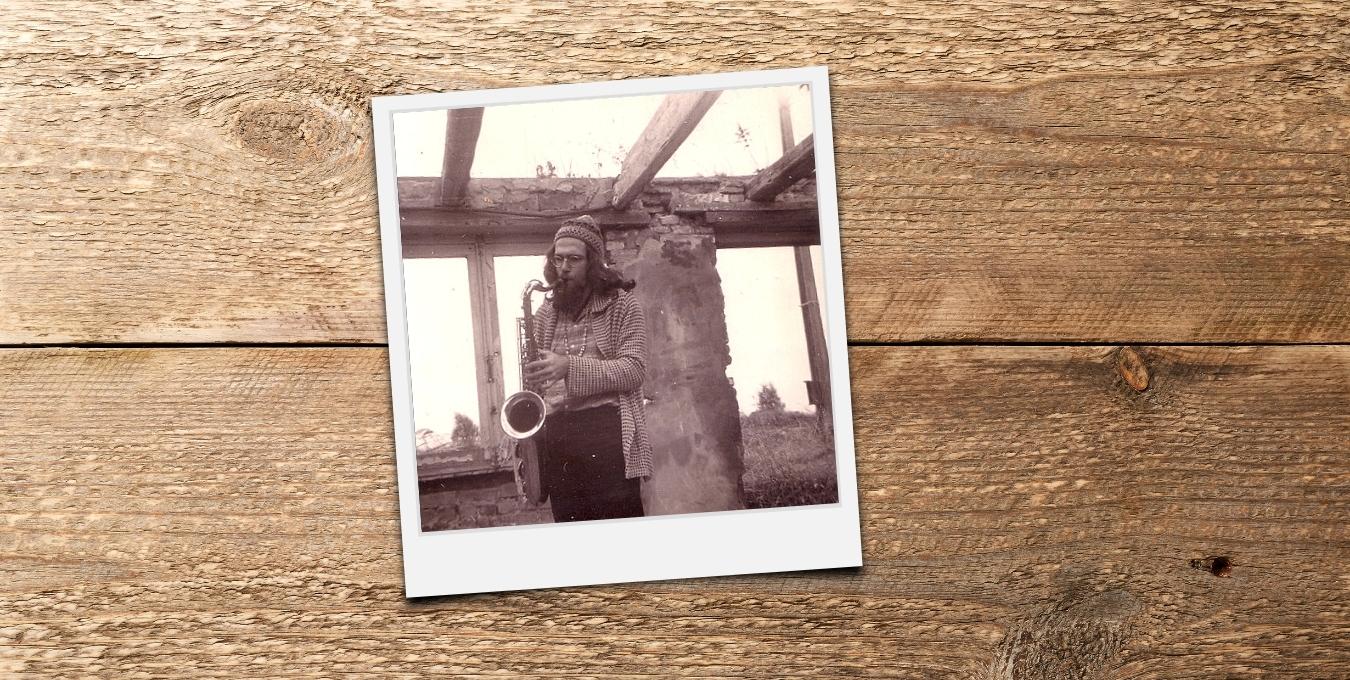
The band played a 5 day residency in July 1970, at a club in Munich. Driving back from there, the van started to play up, and so they left the motorway to go into the next city, which was Nurnberg. Driving around they spotted a freak with long hair and stopped to ask him if he knew of a garage – it turned out to be ‘Mandy’ Reidelbauch. Not only did he know a garage, but he played tenor sax and flute and had a practice studio which he invited them to for a jam while the van was fixed!! We invited Mandy join us in Somerset, when Jessica decided she had had all she could take of 5 male musicians and at the moment we were recording ‘Arena’. The result is why there is the beautiful flute solo on Spring, with both playing.
Mandy had left Germany to join the band and shortly afterwards he was called up for army conscription, but he was so pleased to be in the band in England, that he hesitated, probably egged on by the other band members, whose culture was not fond of armies.
Later, Marsupilami were back in Holland, and offered a gig in Dortmund. Mandy was given the choice to stay behind but said he would take his chances at the border – nobody imagined his name would be held there – but it was, and they took him, very swiftly and efficiently and put him in a cell. The only book being read in the van at that moment was the second volume of Sartre’s ‘Age of Reason’, and he was given that to sit out the time in the cell and prison. Within days he was a regular in the German army and the six months he went AWOL was reduced from the 18 month(?) conscription term. He was allowed to keep his long hair (in a net), ended up getting fit, mountain climbing, playing in the army band and generally enjoying life.
The band remember France more for the obduracy and bias against long hair of the customs officers. Every time they went to France they were stopped and asked to unload the van and often to strip off. Maybe an example of things to come for UK musicians touring in EU post Brexit. One night they were going from a gig in a Brussels club, (where they shared the upper floor dressing rooms with models who were doing a fashion show before the gig), to a couple of gigs in Alencon and Le Mans, and had to try 6 border posts from Belgium to France before being allowed through by a sleepy customs officer (at 3.30am!). In Alencon the organisers wanted to drum up support for the gig, and so the band drove round the town in the van with a loud hailer, with Fred putting on his best Charles De Gaulle, impersonation, requiring people to attend the gig.
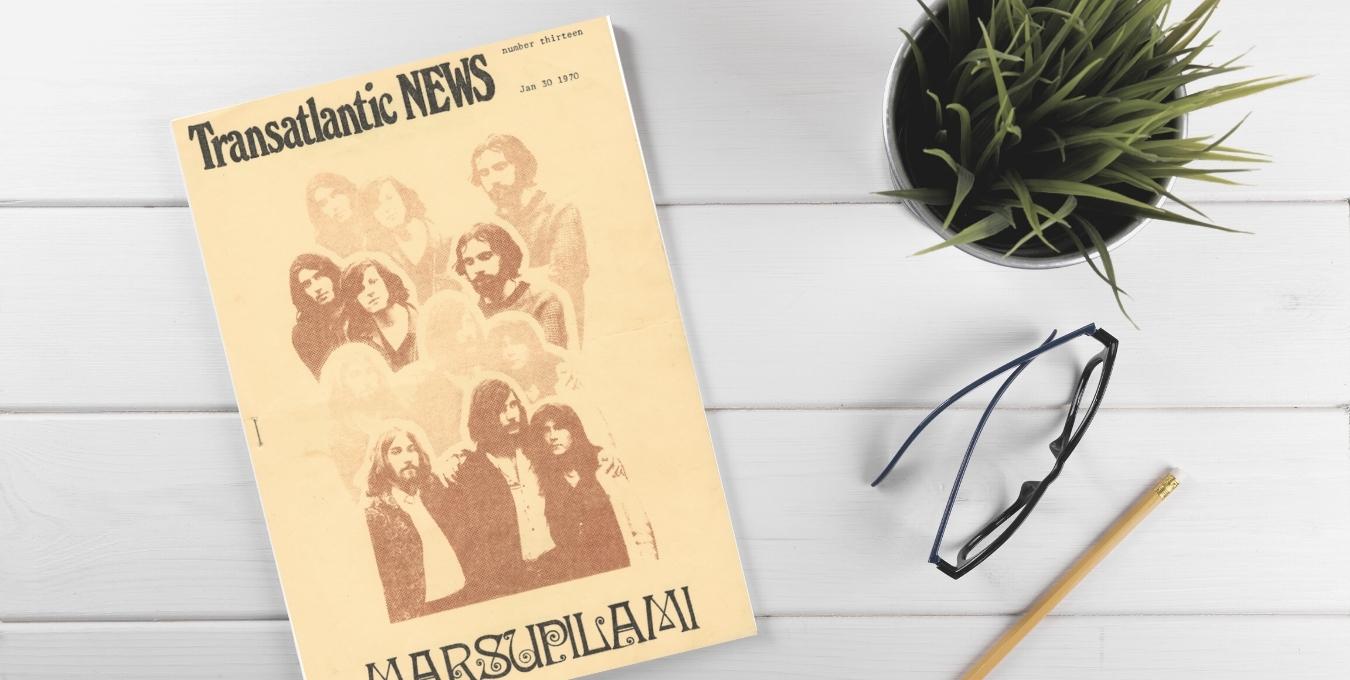
Marsupilami – 1st Album
“Marsupilami” the first album (Transatlantic TRA 213) was recorded in 1969 at the Sound Techniques Recording Studios, just off London’s King’s Road, and released in April 1970. The studio, had been converted from an old dairy, and was just being fitted out with some new gizmo’s called Dolby’s!, when the band arrived. It is famous for the roster of artists recorded there by Joe Boyd: Nick Drake, Incredible String Band and Fairport Convention – the engineer was John Wood, leave this out but the band got the feeling that their kind of music was not understood.
All 5 tracks were done in a handful of takes, virtually live.
The music is distinctive; complex and hardly emulated. The band did not want to create catchy tunes that finished off the same way they started – the tracks represented journeys into the mystical and subconscious places of the mind, with changes of mood, and underpinned by strong and sublime melodies, time sequence changes, stylistic shifts and ruptures of mood following one another: passages move from light folky or jazzy ensembles, to hard driving guitar and organ rock pumped up by the rhythm section, to slow ethereal dream sequences featuring flute, organ and chanting vocals. The content of the album can only be described as apocalyptic, but hopeful for a better world.
Facilis Descensus Averni, is the subject of one of the first music videos made by Jay Myrdal, who accompanied Pete Smith to do a photo shoot for the first album. https://www.youtube.com/watch?v=n2-Qti7H42U
and ‘The eagle chased the dove to its ruin’ contain some especially gloomy lyrics to accompany the affecting? guitar. The instrumental on the album, Ab Initio Ad Finem is a musical interpretation of an Old Testament style sermon, recounting the fall of man in the Garden of Eden, discovering new love spoilt by waring global culture leading to nuclear holocaust written by Leary – part of the track was used by Stuart Henry DJ on Radio One, as an introduction to his show.
Born to be Free is often cited as the best music produced by Marsupilami: with a strong melody, it features many tempo and mood changes, and in the last vocal section a poem written by Fred when he was 16, invoking feelings provoked by the nuclear arms build up. Track 1, Dorian Deep with its slow build up and thumping rock ending, was always a good warm up at the beginning of a gig.
‘The eagle chased the dove to its ruin’ contain some especially gloomy lyrics to accompany the affecting guitar. The instrumental on the album, Ab Initio Ad Finem is a musical interpretation of an Old Testament style sermon, recounting the fall of man in the Garden of Eden, discovering new love spoilt by waring global culture leading to nuclear holocaust written by Leary – part of the track was used by Stuart Henry DJ on Radio One, as an introduction to his show.
Born to be Free is often cited as the best music produced by Marsupilami: with a strong melody, it features many tempo and mood changes, and in the last vocal section a poem written by Fred when he was 16, invoking feelings provoked by the nuclear arms build up. Track 1, Dorian Deep with its slow build up and thumping rock ending, was always a good warm up at the beginning of a gig.
Arena – 2nd Album
“Arena” (Transatlantic TRA 230). The band went on to record a second album a year later, entitled Arena (originally released as Transatlantic TRA 230). It was recorded at Tangerine Studios, Stoke Newington, in 1970 and produced by Peter Bardens of Them and Camel fame. Arena was a concept album that had a similar apocalyptic vein to the first album and drew a parallel between the fall of the Roman Empire and the declining Western Civilisation but with hope at the end.
After reading ‘Those about to die’ by Daniel P. Mannix, Leary teamed up with Bob West, friend, artist and also sometime roadie, who put the words to Leary’s music.
It features early use of the much revered Mellotron.
The album starts with what sounds like an Arthur Brown inspired opening and goes on to chart the decline of the Roman Empire through depravity, self-indulgence, and violence, uses many musical influences including Rimsky Korsakov’s ‘Scheherazade’.
‘Time Shadows’ has particularly strong lyrics:
“Moving inadvertently through a gathering of Satan’s, the ravishing of bodies by the savaging of minds, and the occult is past believing the travelling of meaning….”
“Marsupilami’s creative vibrations are always welcome, a pleasure to work with, hear and watch. I’d like to say on behalf of all of us at Paradiso, that we were left with a lasting impression, not only of Marsupilami’s fine musicianship, but of warm friends who really fit into the scene here”
JIM REVEAUX MC 2 LIGHTSHOW, 1971
“We wish Marsupilami to become a top group. In our international centre, thousands of groups appeared and most of them we liked or were happy with their music, but Marsupilami was and is more to us. One of the alternative groups with love in their hearts and good music too. They belong in our Paradiso family for ever because of their style of music and their behaviour and true talent.”
FRED WESSELS, ART DIRECTOR PARADISO, AMSTERDAM, 1971.
The end
George departed as manager at the end of 1970 having decided that group infighting over whether their music should become more commercial, had become terminal. Fred took over running the band’s business and soon arrived at the same conclusion. Jessica left the band after the recording of the ARENA and the group invited Mandy Reidlebauch to join them in time to also feature on ARENA , before he was arrested on the way to the gig in Dortmund.
He was replaced by Paul Dunmall and Brian Wilshaw (both playing Tenor sax and flute) and who both played on the last tour of Holland in May 1971.

Marsupilami folded in the summer of 1971 and played a farewell concert at the Classic Cinema in Taunton on a September Sunday afternoon in front of a packed house of 500 fans. By this time there was a completely new set of shorter songs, only one of which was ever recorded: ‘Lightshine’ written by Leary and recorded by the band that he subsequently joined, CMU, on their album Space Cabaret (originally released as Transatlantic TRA 259 1972). The trio of Mike, Ricky and Dave continued as Oceans, played a few gigs in London and folded.
Glastonbury 2011
Marsupilami were invited to play at the 40th anniversary of the Glastonbury Festival in June 2011. With only 3 original members of the band available and scattered far and wide, Fred formed a band in Brighton with younger musicians, (Vanessa Thomas, Wayne McConnell, Jim Whyte, Alex Hutson and George Oates), to learn to play a set of 2 pieces from each album and the only non – self composition the band played live– Spoonful. Leary and Paul joined for the set on the day.
Warm up gig in Brighton in June at the Latest Bar : https://www.youtube.com/watch?v=siFMOxGwgKk
Marsupilami were proud of the craft and skills they put into their music, and although they spent much time in Holland, never lived there, as some reviews suggest.
Paul Dunmall ( http://pauldunmall.com/ ) has gone on to become a leading exponent of Free Jazz, Leary, and Fred after taking time out to earn a living, are still playing live music ….we are praying!?